
Author: cronix
KSI Eye Center Donor Report 2021-2024
Medewell Donor Report March 2024
Impact & Gratitude statement
WF-AID extends heartfelt gratitude to Mohsin & Fauzia Foundation for their generous donation of an ultrasound machine to Medewell Health Centre. This invaluable contribution has significantly enhanced the efficiency, addressing the challenges associated with previous outdated ultrasound equipment.
The new machine has proven instrumental in delivering precise and high-resolution images, improving the overall quality of diagnostic results provided to the patients.
In particular, this advanced ultrasound machine has played a pivotal role in the thorough examination of pregnant women, allowing for monitoring the condition of infants and detecting various gynecological problems in women.
The impact of your donation extends beyond mere numbers, positively influencing the standard of healthcare provided at Medewell Health Centre.
We are pleased to share with you the monthly statistics reflecting the utilization of the
ultrasound facility:
January 2024 – 327 patients
February 2024 – 312 patients
Your benevolent support has made a lasting difference in our ability to serve the community effectively, and we are immensely grateful for your commitment to advancing healthcare.
Medewell Donor Report January 2024
Economic Upliftment October 2022 Report
Income Generation scheme
In February 2022, we were able to purchase 6 loader rickshaws as part of a Microfinance project to erase poverty and uplift humanity. After the success of this scheme, in October 2022 we were able to expand this specifically to provide more loader rickshaws to reach more beneficiaries. The rickshaw is a 150cc loader rickshaw which can be used for multiple purposes.
This scheme aims to give those who are struggling financially a livelihood of their own, thereby empowering them. ASB focus on very remote and deprived areas of Pakistan where the Shi’a population is dense; the scheme enables beneficiaries to grow and start a new life.
Each beneficiary is provided with a brand new rickshaw at the cost of $1,430. This is paid back in monthly instalments interest free which makes re-payments manageable and allows the funds to be re-used to purchase another rickshaw within a matter of months to help yet another family.
In this tranche, WF-AID sent $16,500 to purchase 10 new loader rickshaws ASB was able to purchase 11 loader rickshaws with the funds for 10 for the prices quoted earlier. They went an extra mile to get the rickshaws from the company instead and they managed to purchase 11 and now 11 other families have a source of income.
What difference has your support made
According to market rate loader rickshaws price was higher than expected. To stay within the budget and help more people we purchased loaders directly from the company and got special discount. We managed to purchase 11 loaders instead of 10 that was the initial figure. Now we have been able to provide 11 loaders and a source of income to 11 different families.
How you helped people like shaban and will continue to do so with your generous donations

*Our partner on the groundreceived $16,500 from WF-AID, they have spent a total of $15,856.50. The remaining amount $643.50 is being carried forward for the next purchase of loader rickshaws.
*$121 was spent on branding and operational expenses.
*The ground partner was able to purchase 11 loader rickshaws instead of 10 at a discounted price.
Cost

Economic Upliftment February 2022 Report
Income Generation scheme – Loader Rickshaws
This scheme, which is already running, aims to give those who are struggling financially the seeds to earn a livelihood of their own, thereby empowering them with the tools for their own success. Our ground partners focus on very remote and deprived areas of Pakistan where the Shi’a population is dense; the scheme enables beneficiaries to grow and start a new life.
The scheme operates under strict terms and condition and loans will only be provided to those people who are able to follow the ground partner’s rules and regulations.
The scheme will provide microfinance to the beneficiaries by providing the loader rickshaw directly to each head of family for them to generate an income. The beneficiaries will have to pay back the cost of loader rickshaw on interest free instalments. That money will later be used to help more beneficiaries under the scheme.
How have you helped the beneficiaries
With your generous donation we have been able to provide 6 heads of families with a loader rickshaw in order to earn a livelihood once again. The instalments paid back allowed our ground partner to purchase another loader rickshaw for a new beneficiary. In this way, the funds are being used to support more heads of families to be independent. This scheme will not only help these particular families but will also mean that once the loans for the rickshaws are paid back, other heads of families will benefit too.

Cost

Economic Upliftment December 2020 Report
Wheelchair Foundation Spring 2026
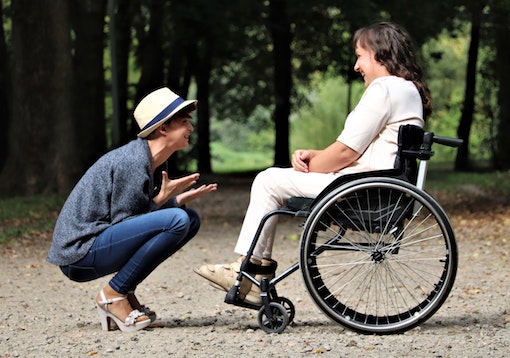
Interview with Dr. Mohsin Jaffer
My involvement with the Wheelchair Foundation began through Scott Ford, who was President of Broward Health Foundation while I served on its board. When he transitioned to the Wheelchair Foundation, he introduced me to its work. I immediately saw its potential and brought the idea to Mombasa, Kenya, where I have deep roots and strong connections through Rotary. When I approached local Rotarians, I told them, “We have an option—you have a need.” Their response was immediate: “We have a tremendous need.”
We shipped our first container of 280 wheelchairs, and it was distributed almost instantly. The demand was overwhelming. We followed with a second shipment, and a third is now on its way, allowing us to serve much of southern Kenya.
The need is immense, and the challenges are real. Poverty is widespread, and government corruption often prevents aid from reaching those who need it most. Too often, funds disappear into political systems rather than helping people. That’s why I strongly believe in working through organizations like the Wheelchair Foundation and Rotary. Rotary is particularly effective because it is volunteer-driven on both the giving and receiving ends, with virtually no administrative overhead. Funds raised go directly toward purchasing wheelchairs, while local Rotarians handle logistics, transportation, and distribution.
My wife Fauzia and I started The Mohsin & Fauzia Jaffer Foundation through which we made all our charity and humanitarian endeavors.
My perspective is shaped by experience. I grew up in Mombasa, and my family has lived in Kenya for generations. I studied medicine in India on scholarship and returned to work in rural Kenya, where I saw firsthand how lack of mobility traps people in dependency. Without a wheelchair, many are forced into a life of begging. With one, they can become independent and productive. It’s a simple intervention with profound impact. Later, I came to the United States for medical residency in the early 1980s. At that time, conditions in East Africa had become increasingly hostile for Asians. In America, I found something different—I was judged by my work, not my background. That opportunity allowed me to build a life and, in turn, give back.
Rotary has been a constant thread throughout my life. I !rst joined as a student in Kenya, leading an Interact Club project to raise funds for a television in a polio clinic—giving children their !rst connection to the outside world. Years later, I joined Rotary Club of Weston, Florida, in District 6990 where I remain active today. For me, philanthropy is a responsibility. Some of us are fortunate to have more than we need. The question is not how much we accumulate, but what we do with it. At the end of the day, we are measured by the lives we’ve touched. A single wheelchair can transform not just one life, but an entire family’s future. That’s a powerful opportunity to make a real difference.
“WE HAVE AN OPTION—YOU HAVE A NEED.”
THEIR RESPONSE WAS IMMEDIATE:
“WE HAVE A TREMENDOUS NEED.”
Our work now extends beyond Kenya to places like Tanzania, Zanzibar, and the Bahamas, with plans to expand further. Africa, in particular, has long been exploited for its resources while its people remain underserved. Yet the people themselves are generous, resilient, and deserving of far more support. Through partnerships with dedicated individuals and organizations, we are making meaningful progress—and I am committed to continuing this work for as long as I can. I have told my Rotary Club, anywhere you find there is a need and you want to send wheelchairs, my foundation – The Mohsin and Fauzia Jaffer Foundation – will step up to the plate and help.
File
BOMU Hospital Program Report – 2026
This report captures the impact of the Mohsin and Fauzia Jaffer Foundation program dedicated to improving the lives of women and children through accessible healthcare, social support, and economic empowerment. With the support of the Foundation, the initiative continues to address critical needs ranging from patient support groups that provide psychosocial care to emergency medical interventions that ensure life-saving treatment for women.
The program further extends its reach to vulnerable children through orphan care support, providing essential nutrition and scholastic materials to promote stability and education. Through outreach clinics in remote areas, communities are able to access vital services including laboratory testing, medication, and ongoing management of chronic conditions such as diabetes. In addition, vocational training initiatives equip women with practical skills for income generation, fostering independence and long-term resilience.
Together, these interventions reflect a 360 approach to care, one that not only responds to immediate health needs but also invests in the dignity, stability and future of the communities serve.
PSA Oxygen plant proposal
Project Overview
The installation of a PSA Oxygen Plant at DHQ Parachinar to establish a reliable, on-site oxygen generation system within the district. The plant will produce medical-grade oxygen (90–95% purity) with a capacity of 5 Nm³ per hour, enabling the hospital to meet its oxygen requirements independently.
The system will include an air compressor, filtration unit, storage tank, cylinder filling manifold, automated control panel, and a dedicated backup generator to ensure continuous 24/7 operation, even during power outages or periods of isolation.
Located along Pakistan’s mountainous border, District Kurram and its hub Parachinar face persistent challenges due to geographical isolation, limited infrastructure, and recurring security-related disruptions. Frequent road blockages cut off the region from major cities, restricting the supply of essential items such as medicines and medical oxygen.
The population largely depends on daily wage labor and small-scale livelihoods, making it difficult for families to access timely healthcare or travel outside the district during emergencies. Healthcare facilities remain under-resourced and heavily dependent on external supply chains.
In such conditions, the most critical gap is the lack of reliable oxygen availability. Hospitals rely on oxygen cylinders transported from other cities, and when roads are closed, this supply is disrupted. This creates life-threatening delays for critically ill patients, including newborns, emergency trauma cases, and those with respiratory conditions.
Key Outcomes
- Supports approximately 15–20 patients simultaneously
- Benefits around 1,000 patients per month
- Ensures continuous oxygen availability for critical and emergency care
- Reduces reliance on externally transported oxygen
- Strengthens hospital preparedness during road closures and crises