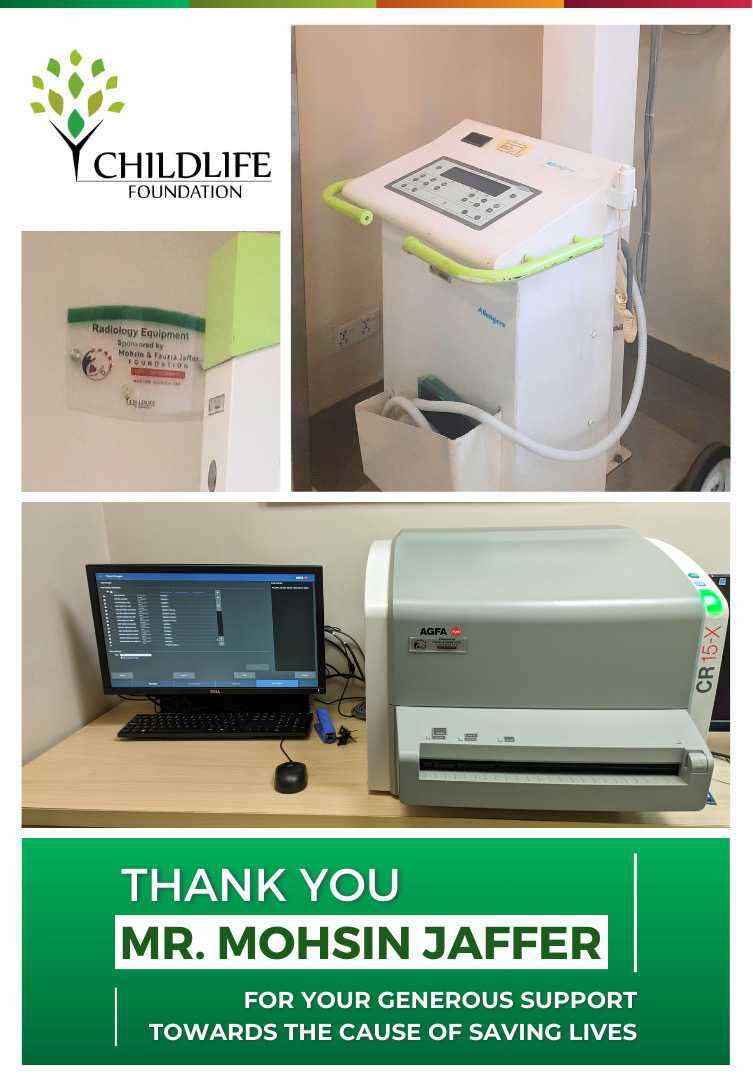
We are honored to have received this message of appreciation following our contribution toward sponsoring a digital X-ray machine and digital viewing system at ChildLife’s Emergency Room in Lyari General Hospital, Karachi. Supporting initiatives that enhance critical healthcare infrastructure, especially for children in urgent need, remains close to our mission. This acknowledgment reinforces our commitment to making a meaningful difference, and we are grateful for the opportunity to contribute to improved medical care and better outcomes for the community.
With our sponsorship of digital X-ray services at ChildLife’s Emergency Room in Lyari General Hospital, over 50,000 underprivileged children now have access to free, round-the-clock X-ray services within the ER. This initiative significantly enhances both the speed and quality of medical care, enabling timely diagnosis and more effective treatment for children in urgent need. We are grateful for the opportunity to support such a vital service and contribute to improving healthcare outcomes for the community.
The Free Eye Camp project was a targeted medical intervention implemented by WF-AID at District Headquarters Hospital (DHQ), Parachinar, and Al-Zahra Hospital, Hangu, between 21 December 2025 and 11 January 2026, building on the successful completion of earlier cataract surgery interventions in Parachinar.
The strong response to previous camps highlighted a continued need for accessible eye care, leading to the expansion of services during this phase.
Thanks to the generous support of the Mohsin & Fauzia Jaffer Foundation (MFJ), this initiative reached a total of 1,309 patients. Out of these, 350 patients underwent free cataract surgery using modern phaco techniques, including 325 surgeries in Parachinar and 25 in Hangu, while 830 patients received essential medicines following OPD eye consultations.
Services were delivered by an experienced eight-member medical team. The project contributed to improved vision and better daily functioning for vulnerable individuals, particularly the elderly, widows, and low-income earners.
Thanks to the generous support of the Mohsin & Fauzia Jaffer Foundation (MFJ), this initiative successfully provided 200 free cataract surgeries and 830 free eye consultations to underprivileged patients. A team of eight medical professionals, led by Dr. Tanveer Abbas, performed the surgeries using modern Phaco techniques. This initiative marked the first instance of advanced Phaco surgeries being performed in Parachinar, successfully restoring sight and independence to hundreds of individuals. In total, 830 people benefited, many of whom were widows and low-income laborers.
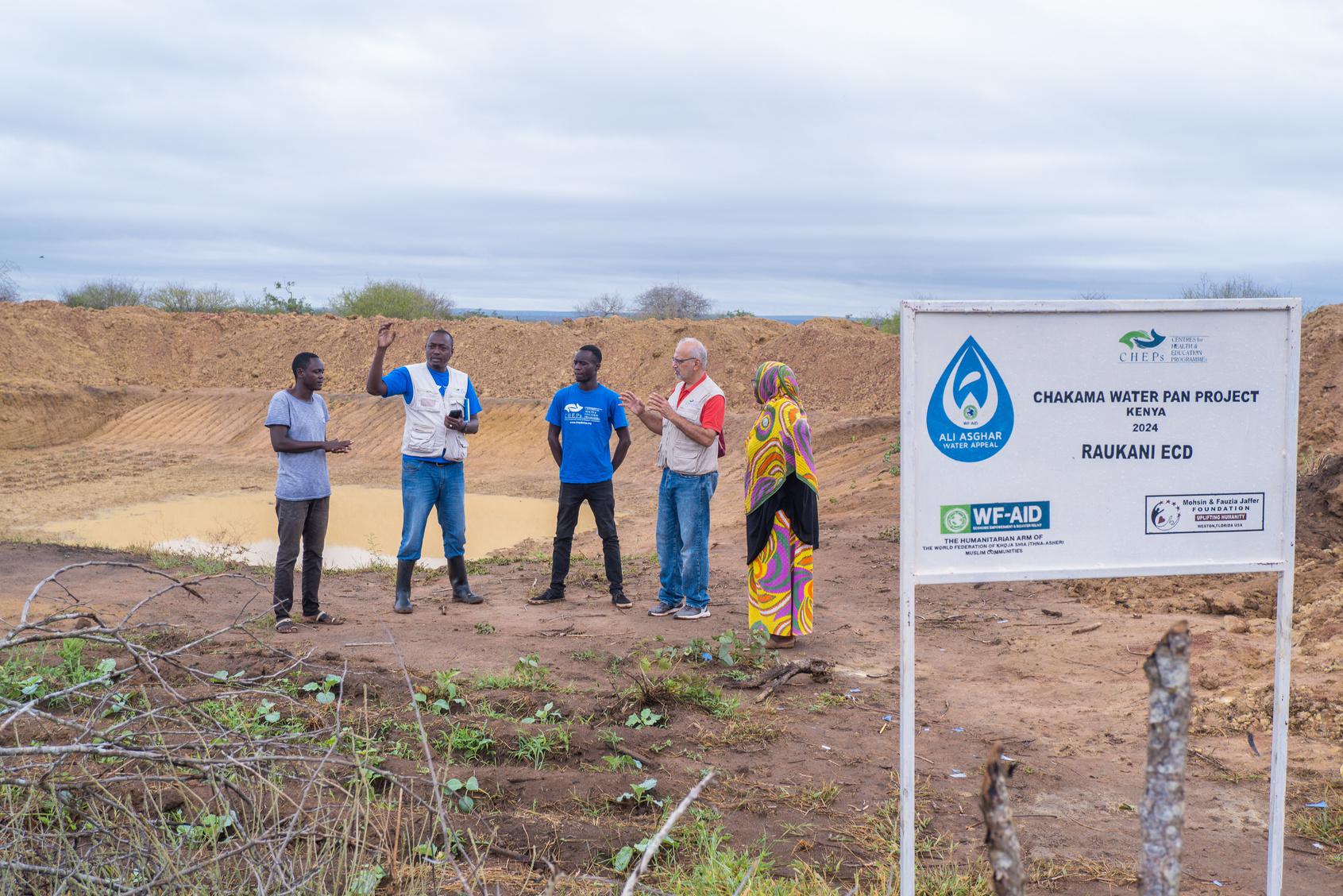
On behalf of WF-AID we thank you for generous contribution of USD 35,000 towards the construction of 10 water pans in the chakama region. Your donation has benefitted the lives of over 4,000 people.
These water pans will be a means to clean and safe water consumption and utilization for the residents of Chakama.
Rejoice in the good you have helped contribute to, but your reward lies with Allah. May he continue to shower his blessings on you and allow us to keep making impactful changes to the people who need it the most.
We are grateful to Rise Against Hunger for this appreciation. It is an honor to support their mission of ending hunger, and this recognition inspires me to continue contributing to initiatives that create meaningful and lasting impact.
Our mission is to end hunger in our community by going beyond immediate food support and connecting families to the resources, training, and assistance they need to thrive and achieve lasting stability. Through compassion, collaboration, and shared purpose, we strive to build a stronger community for generations to come.
What started as a modest initiative with the aim of eliminating hunger has evolved into a larger movement dedicated to driving long-term impact.
Today, the focus goes beyond food distribution, ensuring families can access the resources, guidance, and opportunities needed to achieve stability and self-sufficiency.
This progress is driven by the unwavering support of partners, volunteers, and donors who contribute with genuine care and commitment each day.
While we acknowledge the journey so far, our vision is firmly set on the future—continuing to serve, expanding our reach, and working together toward a community free from hunger.
Our mission is to make a meaningful difference in people’s lives by supporting BOMU Hospital through donations that enhance healthcare access, improve facilities, and provide critical medical support to those in need. We believe every individual deserves compassionate and timely care.
The annual report for BOMU Hospital provides a comprehensive overview of the hospital’s performance, achievements, and growth over the past year. It highlights key milestones across medical services, patient care, infrastructure development, and community outreach initiatives.
Throughout the year, BOMU Hospital has remained committed to delivering high-quality healthcare services, focusing on patient safety, advanced treatment methods, and compassionate care. The report outlines improvements in clinical outcomes, the introduction of new medical technologies, and the expansion of specialized departments to better serve the community.
In addition to medical advancements, the report emphasizes the hospital’s dedication to staff development and operational excellence. Training programs, recruitment of skilled professionals, and process enhancements have contributed to improved efficiency and patient satisfaction.
The annual report also sheds light on the hospital’s financial health, demonstrating responsible management and sustainable growth. Investments in infrastructure, equipment, and digital transformation have positioned BOMU Hospital to meet future healthcare demands effectively.
Overall, the report reflects BOMU Hospital’s ongoing mission to provide accessible, reliable, and high-quality healthcare while continuously striving for innovation and excellence in all areas of service.
FIU Hosts Annual Interfaith-Iftar during Ramadan 2026
Project Mission:
Florida International University Hosts Annual Interfaith Iftar to Celebrate Ramadan MIAMI, Florida
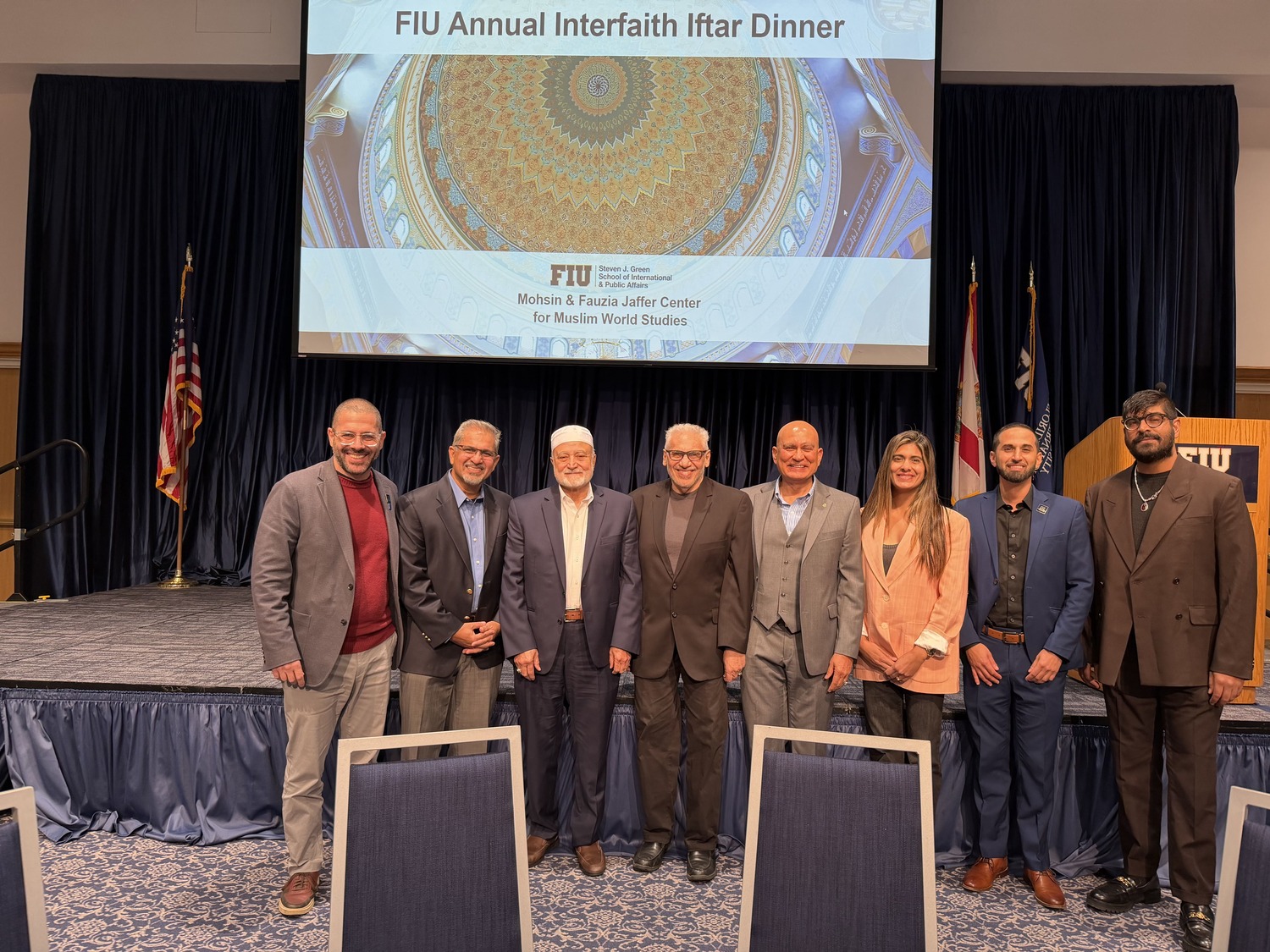
Guests gathered at the Graham Center at Florida International University (FIU) for the Jaffer Center for Muslim World Studies’ Annual Interfaith Iftar Dinner in observance of Ramadan. The event brought together students, faculty, religious leaders and community members to break the daily fast and learn more about Islamic traditions.
While many attendees came to observe the breaking of the fast after abstaining from food and drink since dawn, others attended to better understand a different faith. Some students also welcomed the opportunity for a shared evening meal during the week. Regardless of their reasons, the gathering reflected a spirit of unity and cultural exchange.
Understanding Ramadan: A Month of Reflection and Community
Ramadan, observed by nearly two billion Muslims worldwide, is considered Islam’s holiest month. It commemorates the revelation of the Qur’an and is marked by fasting, prayer, charity and spiritual reflection.
This year, Ramadan began on February 17 and concludes on March 19. While it is widely known for fasting from sunrise to sunset, the observance extends beyond physical restraint. The month encourages believers to reconnect with faith, strengthen family bonds and prioritize meaningful aspects of life.
Dr. Aisha Subhani, a guest speaker and former director of the Deen Intensive Foundation, described Ramadan as a time when community spaces become vibrant.
“Mosques and Islamic centers come alive,” she said. “It creates a bond during that month that may not exist throughout the rest of the year. It reminds us that we’re not meant to live in isolation, but to build community.”
A “Cosmic Pause” for Self-Reflection
Mohiaddin Mesbahi, director of FIU’s Jaffer Center for Muslim World Studies, referred to Ramadan as a “cosmic pause” — an opportunity to reflect on life’s direction and purpose.
Though iftar dinners are traditionally hosted in mosques or private homes, FIU’s annual event is intentionally multi-faith. It aims to educate non-Muslims about Ramadan while fostering dialogue across cultures and religions.
Subhani emphasized that learning about other traditions can reduce misunderstanding and division.
“The more you learn about other cultures and traditions, the more ignorance and hate begin to fade,” she said. “Ramadan is truly a month of light.”
The Tradition of Breaking the Fast
As sunset approached, plates of dates and fresh fruit were placed at each table. Attendees waited for the call to prayer before breaking their fast.
Mohamed Ghumrawi, assistant director of the Jaffer Center, led the Maghrib prayer just before sunset. Following tradition established by the Prophet Muhammad, many participants began their meal with a date. Dates are not only symbolic but also provide a natural source of energy after a day without food or drink.
The atmosphere in the room reflected diversity and inclusion. Families dressed in festive attire shared tables with local religious leaders. Exchange students enjoyed baklava alongside professors from FIU’s School of International and Public Affairs. The evening highlighted the university’s commitment to global engagement and cross-cultural dialogue.
Dr. Mohsin Jaffer encouraged students to embrace the opportunity to learn from one another.
“I hope our students, with the support of these centers, will truly understand all cultures, faiths and traditions and become the leaders our nation needs,” he said.
Shared Traditions Across Faiths
Speakers noted that fasting is not unique to Islam. Many religious traditions include periods of abstinence and reflection. This year, Ramadan overlaps with Lent, the Christian 40-day season of fasting and spiritual discipline leading up to Easter.
Those observing Lent often give up certain luxuries or habits while increasing acts of service and worship — demonstrating parallels between faith traditions.
A Message of Neighborliness and Unity
Imam Serjeel Ahmed of the Ahmadiyya Muslim Community of South Florida shared a personal reflection from this Ramadan: asking daily, “How can I be good to my neighbor?”
He suggested that such a simple question could help create a more peaceful world.
“The more I meet people from different parts of the world, the more I realize we’re all the same. We’re branches of the same tree, stemming from the same root,” Ahmed said.
For FIU student Pape Thioune of Senegal, Ramadan provides a welcome pause from a busy academic schedule.
“I love when everyone gets together to share food and thoughts,” he said. “The community is my favorite part.”
FIU faculty members for a teach-in to discuss the Iran War.
This event, organized by our team, brought together faculty members from Florida International University for an insightful teach-in on the Iran War. The roundtable explored both the historical background and current developments shaping the conflict, offering attendees a comprehensive understanding of its regional and global implications. Through guided discussion, we aimed to create a space for informed dialogue around one of today’s most pressing geopolitical issues.
As part of our ongoing efforts to foster meaningful conversations, we curated this session to highlight diverse academic perspectives on the motivations behind the war and its possible outcomes. The discussion also examined how the conflict could influence international relations and U.S. domestic politics, encouraging participants to engage critically with the topic.
Our goal with this event was to provide a platform for thoughtful exchange and deeper learning. By bringing together subject-matter experts, we facilitated a balanced conversation that addressed the complexities of the situation while making it accessible to a broader audience. The session reflected our commitment to promoting awareness and informed discussion on global affairs.
Overall, the event stands as a reflection of our dedication to creating impactful, educational experiences. It offered attendees valuable insights into the Iran War while reinforcing the importance of dialogue, critical thinking, and community engagement in understanding global challenges.