FIU Hosts Annual Interfaith Iftar During Ramadan 2025

FIU Hosts Annual Interfaith-Iftar during Ramadan 2025

Project Mission:

Florida International University Hosts Annual Interfaith Iftar to Celebrate Ramadan MIAMI, Florida

— March 5, 2025

Guests gathered at the Graham Center at Florida International University (FIU) for the Jaffer Center for Muslim World Studies’ Annual Interfaith Iftar Dinner in observance of Ramadan. The event brought together students, faculty, religious leaders and community members to break the daily fast and learn more about Islamic traditions.

While many attendees came to observe the breaking of the fast after abstaining from food and drink since dawn, others attended to better understand a different faith. Some students also welcomed the opportunity for a shared evening meal during the week. Regardless of their reasons, the gathering reflected a spirit of unity and cultural exchange.

Understanding Ramadan: A Month of Reflection and Community

Ramadan, observed by nearly two billion Muslims worldwide, is considered Islam’s holiest month. It commemorates the revelation of the Qur’an and is marked by fasting, prayer, charity and spiritual reflection.

This year, Ramadan began on February 17 and concludes on March 19. While it is widely known for fasting from sunrise to sunset, the observance extends beyond physical restraint. The month encourages believers to reconnect with faith, strengthen family bonds and prioritize meaningful aspects of life.

Dr. Aisha Subhani, a guest speaker and former director of the Deen Intensive Foundation, described Ramadan as a time when community spaces become vibrant.

“Mosques and Islamic centers come alive,” she said. “It creates a bond during that month that may not exist throughout the rest of the year. It reminds us that we’re not meant to live in isolation, but to build community.”

A “Cosmic Pause” for Self-Reflection

Mohiaddin Mesbahi, director of FIU’s Jaffer Center for Muslim World Studies, referred to Ramadan as a “cosmic pause” — an opportunity to reflect on life’s direction and purpose.

Though iftar dinners are traditionally hosted in mosques or private homes, FIU’s annual event is intentionally multi-faith. It aims to educate non-Muslims about Ramadan while fostering dialogue across cultures and religions.

Subhani emphasized that learning about other traditions can reduce misunderstanding and division.

“The more you learn about other cultures and traditions, the more ignorance and hate begin to fade,” she said. “Ramadan is truly a month of light.”

The Tradition of Breaking the Fast

As sunset approached, plates of dates and fresh fruit were placed at each table. Attendees waited for the call to prayer before breaking their fast.

Mohamed Ghumrawi, assistant director of the Jaffer Center, led the Maghrib prayer just before sunset. Following tradition established by the Prophet Muhammad, many participants began their meal with a date. Dates are not only symbolic but also provide a natural source of energy after a day without food or drink.

The atmosphere in the room reflected diversity and inclusion. Families dressed in festive attire shared tables with local religious leaders. Exchange students enjoyed baklava alongside professors from FIU’s School of International and Public Affairs. The evening highlighted the university’s commitment to global engagement and cross-cultural dialogue.

Dr. Mohsin Jaffer encouraged students to embrace the opportunity to learn from one another.

“I hope our students, with the support of these centers, will truly understand all cultures, faiths and traditions and become the leaders our nation needs,” he said.

Shared Traditions Across Faiths

Speakers noted that fasting is not unique to Islam. Many religious traditions include periods of abstinence and reflection. This year, Ramadan overlaps with Lent, the Christian 40-day season of fasting and spiritual discipline leading up to Easter.

Those observing Lent often give up certain luxuries or habits while increasing acts of service and worship — demonstrating parallels between faith traditions.

A Message of Neighborliness and Unity

Imam Serjeel Ahmed of the Ahmadiyya Muslim Community of South Florida shared a personal reflection from this Ramadan: asking daily, “How can I be good to my neighbor?”

He suggested that such a simple question could help create a more peaceful world.

“The more I meet people from different parts of the world, the more I realize we’re all the same. We’re branches of the same tree, stemming from the same root,” Ahmed said.

For FIU student Pape Thioune of Senegal, Ramadan provides a welcome pause from a busy academic schedule.

“I love when everyone gets together to share food and thoughts,” he said. “The community is my favorite part.”

Bringing Light Through Community

FIU’s annual interfaith iftar demonstrated how Ramadan serves not only as a month of spiritual discipline, but also as a time to strengthen bonds across cultures and beliefs. Through shared meals and open dialogue, the evening reflected a broader message of unity, reflection and compassion.

Kenya Water Project Proposal Sep 2025

Kenya Water Project Proposal September 2025

Ali Asghar Water Appeal

In memory of the youngest martyr of Karbala, the Ali Asghar Water Appeal (AAWA) is WF-AID’s flagship initiative dedicated to providing Water, sanitation, and hygiene (WASH) initiatives to communities in dire need.

Every Drop Counts

AAWA is dedicated to providing clean and safe water to some of the world’s most water-scarce regions. By installing wells, filtration systems, and water tanks in schools, clinics, mosques, and community centers. The appeal tackles one of the most pressing global needs: reliable access to water. Through these efforts, thousands of families have experienced profound improvements in health, dignity, and overall quality of life.

WASH Intervention in Rural Kenya

Communities in Kilifi County and Tana River County face severe challenges in water access, sanitation, and hygiene. Both areas are hot, semi-arid, and chronically water-scarce, forcing families to rely on unsafe sources. Poor hygiene and inadequate sanitation facilities contribute to widespread disease, while poverty and weak education services compound community vulnerability. These conditions create an urgent need for sustainable water, hygiene, and health interventions to improve public health.

Current Need

Two projects are proposed below to address the urgent WASH needs in these counties.

In Chakama, Kilifi County, families face widespread hygiene challenges, with poor access to sanitation and basic supplies, leaving communities vulnerable to preventable illness. The first project aims to address this need by providing hygiene packs, alongside training to increase awareness of proper hygiene practices.

Across Tana River County, marginalised communities suffer from extreme water insecurity, with no reliable access to safe drinking water. The second project is for the construction of 20 shallow wells, providing drinking water to a large number of beneficiaries.

Project 1 – Hygiene Packs

Projects details

There is an urgent need to supply essential hygiene and health supplies across the Chakama region, which consists of 48 villages. This project aims to reach 600 vulnerable families with hygiene packs.

Objectives:

  • Provide packs containing essential hygiene and health supplies.
  • Train families on safe water treatment, daily hygiene practices, and appropriate use of the supplies.
  • Prevent and treat waterborne illness, diarrhea and skin infections.
  • Raise awareness and encourage sustainable hygiene practices beyond the project’s duration.

Hygiene pack details

Each hygiene pack will contain:

  • A bucket with a tap, which allows sedimentation of water.
  • Chlorination solutions for the purification of water.
  • Soap
  • ORS for diarrhea treatment.
  • Antifungal creams for treating skin infections.

Alongside these packs, training on hygiene practices will be provided, increasing the long-term impact of this project, as these communities will be better equipped to face future challenges to public health.

Cost and beneficiaries breakdown

The following breakdown outlines the associated costs to the sourcing and delivery of hygiene packs. We believe this breakdown will offer you a thorough understanding of how your generous contribution will be utilized to make a positive impact on the community.

Project 2 – Kenya Community Wells

Project details

There is an urgent need to establish reliable and safe water access for a number of rural communities in Tana River County, Kenya. Currently, water is fetched from the crocodile infested river Tana.

Outbreaks of cholera, diarrhea, and typhoid are frequent due to this reliance on contaminated water.

Objectives:

The proposed 20 hand shallow wells will:

  • Provide clean and safe drinking water for households.
  • Reduce waterborne diseases and improve community health.
  • Improve safety and reduce risks during water collection.
  • Save time for women and children, enabling education and economic participation.
  • Strengthen community resilience and development.

Each well will supply 2,000 – 3,000 litres daily, meeting household and small-scale farming needs.

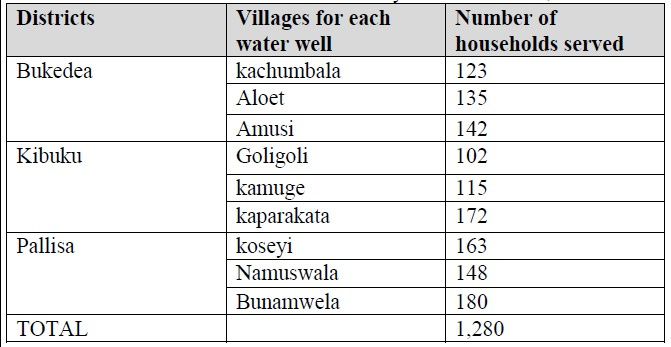
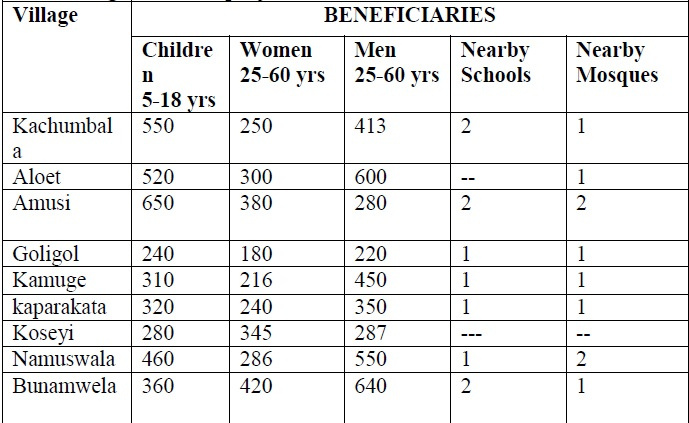
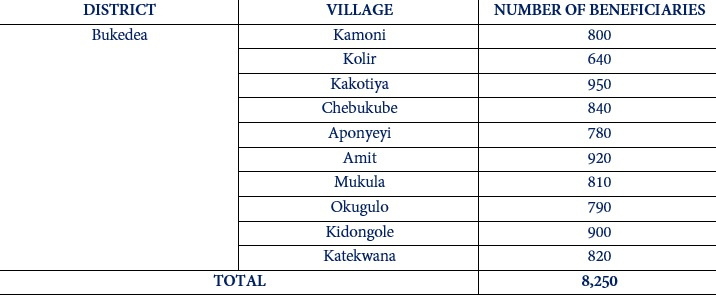
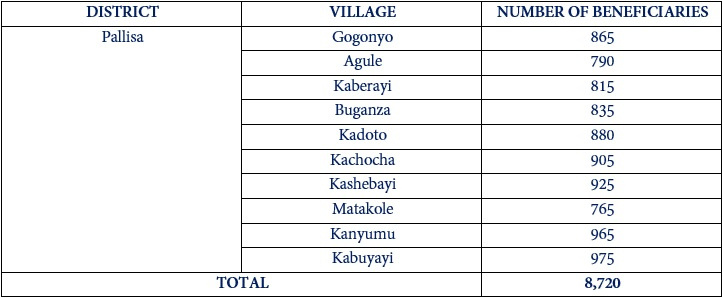
With 20 Wells supplying water to 10,000+ individuals, including schoolchildren, widows, and vulnerable households.

To increase the long-term impact of this project, local water committees will be trained on pump maintenance and hygiene procedures.

Cost and Beneficiaries breakdown

Cost Summary

Through your contributions, these two projects will tackle some of the most urgent needs for WASH facilities in Kenya. A combined total of 13,000+ beneficiaries will be reached through these projects.

Marriage Assistance Program 2021 Report

WF-AID would like to show its appreciation to the Mohsin & Fauzia Jaffer Foundation USA for its continued support towards a wide range of initiatives in uplifting humanity – from water projects, winter relief, food packs for Ramadan and much more. A recent project in Pakistan, which the Foundation generously contributed USD $35,658 towards,
provided financial assistance for 50 marriages to take place for needy individuals in Parachinar.

These individuals were chosen through a selection process, whereby the families of the individuals wanting to get married notified the implementing organisation in confidence and their application was verified for eligibility with the support of the Ulama-e-Karam. From the marriages, 80% of the couples belonged to near relatives of those that had been martyred by sectarian violence conducted by the oppressive Taliban.

Our ground partner worked in conjunction with the “Markaz” in Parachinar to coordinate the ceremony, arrange for the dowry and liaise with the Ulama for the necessary logistics. The date was set as 21st February 2021, where there was a large community function held in an open space (to reduce the risk of COVID-19).

The function started with verses of the Holy Qur’an, then the Master of Ceremony welcomed the guests and thanked The World Federation and Mohsin & Fauzia Jaffer Foundation USA for their valuable support. TV and media were present at the function, who noted the organisations on a national news broadcast for their philanthropic work.

After some speeches, the Nikah ceremonies took place along with some words of wisdom by respected speakers followed by a wedding feast. The grooms were then presented with a list of articles for the dowry.

Speeches prior to the Nikah ceremony
One of the grooms at the function

Beneficiary Stories

The following are real-life examples of individuals benefiting from the MAP.

Imtiaz Hussain

I am a resident of a tiny village situated near Parachinar. I belong to Afghanistan tribe named Hazara. We were living a peaceful life in Bamiyyan area of Afghanistan. Approximately 18 year ago, Taliban terrorists attacked our village with guns and heavy armour. During this battle, many our men were martyred. Only women and children were able to rescue their lives. I was one of them. Black days in my life started from that day. Our homes were also destroyed.

Wandering for almost a year, we finally reached Parachinar. With cooperation of local Shia brothers, we were able to live in an open spaced tent. Up to now I have lost everything. I lost my home, my father, my uncles, my assets, foods everything. In spite of such huge loses and disappointment, I started my life again from zero. I remember the harsh days of winter, when I was without dress, shoes and any warm support which could save me from chilling cold air. I also dreamed to go to school, but this dream could not became real one; as I was elder to my 4 bothers, I had to start my earning at the age of 10. My brothers and my mother were living from my tiny income from the bazar. I am still working in Parachinar bazar to continue our family lives. I am living with my mother and other brothers and sisters in a rented mud house.

As, my elder sister’s age was complete, it was my responsibility to make arrangements for her marriage. In spite of many dreams and wishes in my eyes for her marriages, I could not do anything due to extreme poverty. 20 day ago, I applied for assistance to a welfare organization. Thanks to Allah, almighty my application was accepted.

My sister got a lot of items in the form of dowry from the organization. I was not able to make it possible with in my life. Our family was also very happy that their marriage was attended by so noble dignitaries, scholars and respected personalities. It was a historical function. When my sister was going to her new home, we were also weeping, but this time these tears were not the tear of sorrows, but the tears of happiness. May Allah accept all from those who have helped us, without knowing who we are, and in how much trouble we are.

Wajid Hussain

I am resident of Kanj Ali Zai. We are basically a poor family. Now my father is aged. He cannot not do any hard labour jobs or other hard earning activities. When I became an adult, I started a labour job with a mason in my village. People hesitated to hire me as a worker, because I was very young. I went to Molana Abid Hussaini, told him about my poverty and miserable condition. He asked someone and gave me assistance to earn in the bazar. I kept earning for many years. After that I started a security guard duty at Tehreek Hussaini office.

My parents were aged, they asked me to marry in their lives. We were poor and could not make arrangements of marriage. On the other side, parents of brides were asking repeatedly for marriage. I was very disappointed; I asked for guidance and help from my friend. He said I can do it for you easily. I was shocked that how it can be. He briefed me that every year Anjuman Samaji Behbood make arrangement for poor parents’ daughters’ marriages in the form of Marriage Asisstance Programme – apply for it and Allah would help you on your door step.

I applied in year 2020, and then I was informed that my application is approved and I am being added in MAP of the year 2021. They asked me that your Nikah and Marriage, both would be conducted on 21st February-2021. Thanks to Almighty Allah, that with great cooperation of WF-AID and Mohsin and Fouzia Jaffer Foundation, my marriage has conducted. My parents are very happy. They pray 5 times a day for those angels who have helped us in this big task.

Expenses Breakdown

  • Total received from MFJ: $35,658
  • Total expenditure: $33,272.28 + WF-AID operational expenses: 5% of budget ($33,960) = $1,698.
  • Balance: $688 – this will be carried forward to next year’s Marriage Assistance Programme.

The invoices and bills have been verified by WF-AID.

This particular initiative has uplifted humanity by benefited 50 poor couples in ways they may not have previously imagined. They had the opportunity to get married without incurring expenses in a respectable ceremony and acquiring household items – all at the mere cost of less than $715 per couple for everything!

Blanket Appeal Update 2020 – 2021

As the temperatures plummet this winter, hundreds of thousands of families face a daily battle to stay alive without the heating, food, and clothing they desperately need. Winter generally brings higher expenses, such as heating bills and warm clothes, but for families who already struggle throughout the year, they can’t afford the higher bills. They risk illnesses, and potentially, death. Refugees, who have no option but to live in make-shift shelters, exposed to the elements, are left to worry if their children will die from freezing or starving to death.

WF-AID are working in Afghanistan, Iraq, Yemen, Lebanon, Bangladesh, India, Pakistan, and the United Kingdom to distribute winter essentials to help them through these bitter months.

With respect to Pakistan, we are embarking on a project to distribute winter essentials to needy individuals and families across northern areas where the winter is particularly severe. Our ground partners are working
in Skardu, Gilgit, Astore, Parachinar, Mianwali & D.I.Khan, giving help to those living in poorly made settlements. With no defence against the cold, winter conditions, the reality is that these vulnerable people could die as they can be trapped from the poor infrastructure caused by adverse weather. They suffer from a restriction on income as the conditions cause a standstill in their daily lives, leading to a heightened vulnerability.

To help them during these harsh winter months, we are providing widows, orphans and the general needy with thick quilts, blankets, and shawls. This would be of great support for their physical and mental conditions, being able to go about their normal activities with some warmth.

Locations

The aforementioned locations where WF-AID are targeting the project are all either overwhelmingly Shia or have a significant minority of Shia population, most of whom have suffered persecution or are currently in a destitute condition.

Parachinar

This is a town in the province of Khyber Paktunkhwa and is the capital of Kurrum District. The town is connected to Afghanistan by the Peiwar Pass, a strategic valley located 20km west of Parachinar, where heavy snowfall closes the region for up to five months per year. The town has been frequently hit by terrorist attacks against the Shia population, with over 500 people being killed since 2007. This has left numerous widows and orphans without any support. Due to the geography being on a hilly area, Parachinar has extreme climates, with harsh winters and hot summers.

Gilgit Baltistan

This is the northernmost territory administered by Pakistan part of the greater Kashmir region on the China and Afghanistan border, where the Hindu Kush mountains and the K2 peak are. The towns of Skardu, Gilgit and Astore are all part of this region where the ground agency is targeting the relief efforts. These areas suffer from extremely cold temperatures in the winter, where it often remains cold during the nights even in summer. Snow is common for four months.

District Mianwali

Located in Punjab Province, this hilly area suffers from temperatures extremes – with long, hot summers and cold, dry winters. It is a remote one of the poorest districts in Punjab. Most of the Shia population are settled near the River Indus, where they suffer from loss of property and life each time the flood banks break.

Project Specific

WF-AID would like to request the support of The Mohsin & Fauzia Jaffer Foundation, USA, to distribute warm shawls and material for shalwar kameez to the needy beneficiaries in the aforementioned locations.

These will be made out of warm woollen material to keep the beneficiaries warm from their heads up to their waist. The warm dress and shawl can be used continuously throughout winter for 2-3 years, improving the sustainability of the relief initiative.

Beneficiary Stories

The following are real-life beneficiary stories from WF-AID’s Winter Appeal in Pakistan last year. Name changed to protect identity.

Zeeshan Haider, 6th class at a school in Mari Indus, is an orphan. His father died 2 years ago. His siblings are 6 sisters and 2 brothers, who are being brought up by their relatives. The extended family are so poor they are unable to buy Zeeshan and his siblings proper clothing. He was without adequate clothing during the winter months at school. WF-AID provided a sweater to him and his siblings and protected him from the bitter cold.

Muhammad Ramzan, of D.I. Khan, was initially a resident of District Tannk, KPK. He was a labourer to earn resources for his family as a father of 7 children. After the worst of the sectarian conflict and the targeting of Shia Muslims in the region, he and his family migrated to Jabbar Wala to save their own lives and he worked as a labourer cultivating the land of villages. This is one of the most demanding and lowest paying work in rural Pakistan. When the distribution team providing him and his family with warm winter clothing, he was weeping and his hands were in the air with countless prayers for those who supported his family.

Budget Breakdown

The cost of these warm shawls and material is approximately USD $16 for each piece An ideal quantity for the initiative would be 1,000 units in total. Therefore, the total request is for USD $16,000 along with the WF-AID project implementation and operational amount of 5% ($800).

Item DescriptionQuantityTotal (in USD)
Woollen Shawls & Woollen Material (for Shalwar Kameez)1,000$16,000
WF-AID Admin$800
TOTAL$16,800

Marriage Assistance Program 2020 Report

One of the initiatives which WF-AID has explored in uplifting humanity at large is the collective marriage programme, most notably that which is undertaken by our ground partners in Pakistan.

The selection procedure is initiated by needy Shia families who want to get married but don’t have the financial resources themselves. They notify the organisation in confidence and submit their joint applications, which are scrutinised and verified for eligibility by the organisation and by Ulama-e-Karam. Deserving families are selected for assistance and thereafter the place and date of the marriage ceremonies are determined.

The organisation arranges for a large community function in which a maximum of 50 couples are present with their families. In this ceremony, the Nikah is recited along with words of wisdom by respected speakers and a wedding feast is prepared. The dowry is arranged by the organisation with all the necessary items.

Guests who are invited to attend the marriage ceremonies include brothers and sisters from other denominations as well as non-Muslims, in order to develop a mutual understanding and relationship between people from all walks of life.

The location of the collective ceremonies are held in particularly needy areas such as Parachinar, District Mianwali, Dera Ismail Khan and Bhakkar. At present, there is a requirement of a large ceremony to take place in Parachinar for 50 couples who have been approved to receive the support. These individuals have been particularly affected by the turbulent situation in the region, either directly by the loss of family members or indirectly with the economic loss of income. The budget is provided in the document below.

The total for the initiative for 50 marriages, including operational and project delivery costs is USD $35,658. This works out at under $715 per couple!

Ramadan Relief 2019 Report

Thank you for helping over half a million people living in need this Shahr Ramadan! 66,168 Total Beneficiaries across India, Pakistan, Iraq, Lebanon, Kenya and Zanzibar

Each year, your generous donations provide vital support to people during the Holy month of Ramadan and this year was no different. WF-AID, through our partners on the ground, were helping to ensure that people all around the
world feel the blessings of the Holy month.

Our month-long lasting Food Packs helped vulnerable families in poverty stricken and war-torn countries as well
as refugees fleeing conflict. This year, we were able to distribute 47,628 Food Packs across 21 countries in Africa, Asia and the Middle East.

As part of our aim to empower impoverished communities, we have worked with our partners to implement long term solutions, allowing communities to work towards earning a living. We have funded cooking and baking courses for 12 displaced Syrian widows and orphans, and provided them with the tools and equipment they need to make goods to sell at the local supermarket. Alhamdulillah, this has been a success so far and the women are enjoying their courses and are already selling the products they make!

This has all only been possible through the generous support from our donors, the hard work of our partners on the
ground and tireless volunteers, who have worked through difficult conditions to help facilitate the Ramadan distribution. May Allah (swt) accept your good deeds and reward you all for your efforts.

On behalf of every single one of the 654,532 beneficiaries, I thank you. I hope you enjoy reading this report, which shows some of the impact you have had.

Madiha Raza,
Head of WF-AID